Anti-Pollution Skincare: How Marine Fucoidan Helps Skin Stand Up to Urban Stress
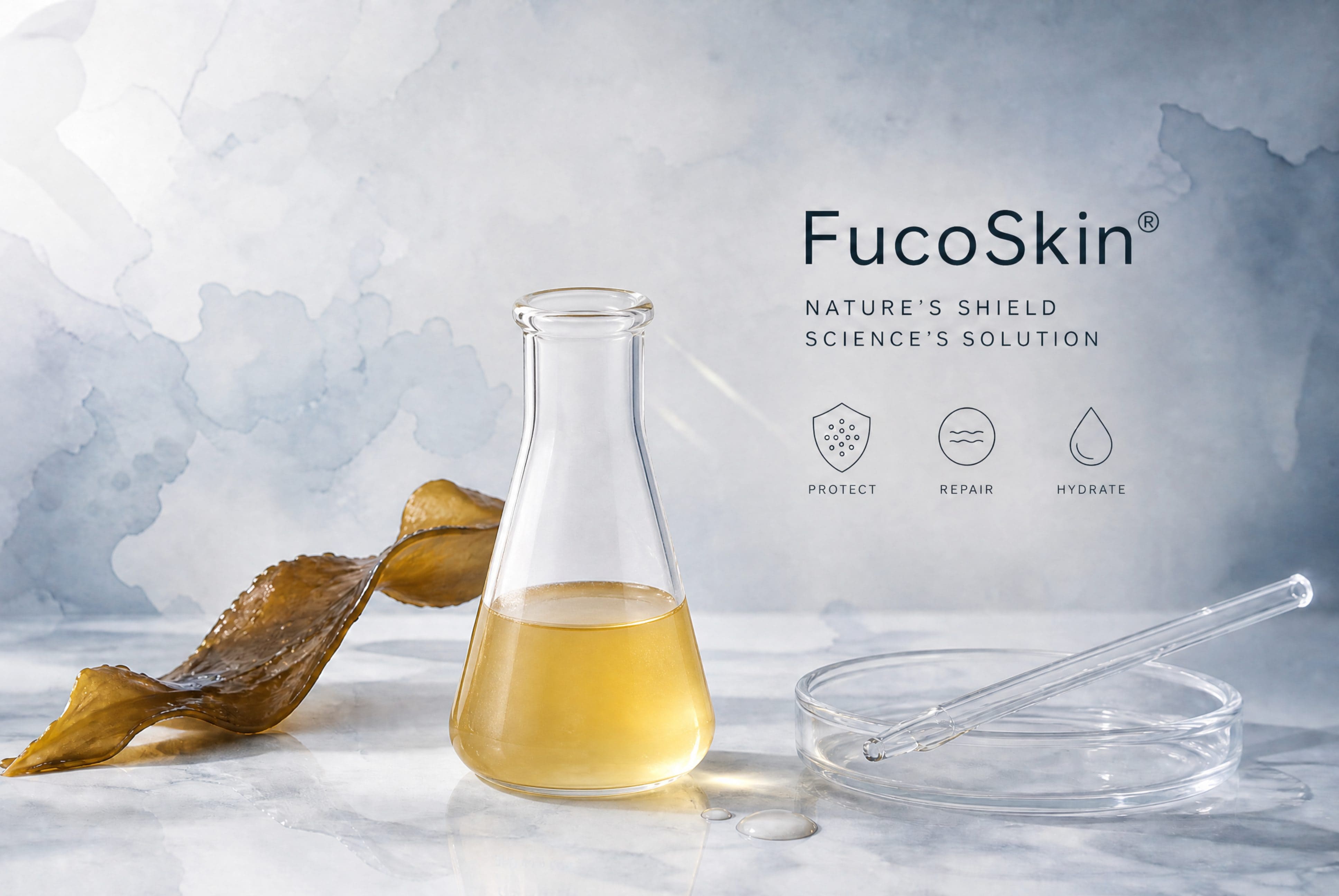
PM2.5, blue light, and oxidative stress are reshaping skincare priorities — and fucoidan is quietly becoming a go-to ingredient for the next generation of urban beauty products.
For years, sun protection was the headline act of skincare. Today, consumers are paying attention to a much wider cast of skin stressors: PM2.5 and traffic pollution, blue light from screens, urban heat, and the chronic low-grade inflammation they trigger. "Anti-pollution" has gone from a marketing buzzword to a serious R&D category — and brands are looking for ingredients that can credibly support this story. Low-molecular weight fucoidan is one of the actives starting to define it.
Why anti-pollution is the next big claim
Dermatology research now links urban exposures to accelerated skin aging, uneven pigmentation, dullness, weakened barrier function, and persistent redness. Younger consumers — especially in Asia — are translating that science into purchase decisions: they want products that go beyond UV defense to address the full spectrum of modern skin stress. For formulators, the brief is clear: deliver antioxidant, anti-inflammatory, and barrier-supporting performance in a single, story-worthy active.
Where fucoidan fits in the science
Low-molecular weight fucoidan (<1500 Daltons), extracted from brown seaweed, has a multi-target profile that maps almost perfectly onto what anti-pollution skincare is trying to do:
• Antioxidant defense. Pollution damages skin largely through oxidative stress and free radical generation. Fucoidan has demonstrated superior antioxidant capacity in cosmetic ingredient testing — helping neutralize the reactive species that drive premature aging.
• Anti-inflammatory action. Inhibition of inflammatory cytokine secretion helps calm the chronic low-grade inflammation linked to urban exposure — addressing redness and sensitivity that consumers increasingly notice.
• Photo-aging protection. Huang and Lin (2016) showed that low-molecular weight fucoidan helps protect skin against UVB-induced damage by modulating matrix metalloproteinase (MMP) expression — relevant because pollution amplifies UV-driven photo-aging.
• Pigmentation control. Fucoidan exhibits anti-melanogenesis effects — useful for the uneven pigmentation and dark spots that PM2.5 and oxidative stress can accelerate.
• Collagen support. A 2017 preliminary study by Wang et al. on a fucoidan-containing cream supported earlier findings that fucoidan promotes fibroblast activity and procollagen synthesis — directly relevant to skin firmness in pollution-exposed environments.
Hi-Q's own human clinical study on FucoSkin® showed measurable results within just seven days: a 3% formulation improved skin texture by 49.0%, reduced pore appearance by 40.1%, improved elasticity by 5.7%, and reduced skin redness by 7.2% in 25 women aged 30–60. Later trials extended these findings to Caucasian and Hispanic skin types — a useful proof point for global brands.
What this means for B2B formulators
Anti-pollution is one of the rare claims that crosses every skincare segment — serums, moisturizers, masks, mists, and color cosmetics with skincare benefits. Fucoidan formulates easily in water-based systems and pairs naturally with niacinamide, peptides, plant-based antioxidants, and modern barrier ingredients. For brands building K-beauty, J-beauty, or premium clean-beauty lines, the marine-derived, sustainable origin story is a meaningful differentiator at point of sale.
Why Hi-Q
FucoSkin® is our cosmetic-grade fucoidan extract — low molecular weight (<1500 Da), produced through a solvent-free, green-technology aqueous extraction from Laminaria japonica (Saccharina japonica) sustainably cultivated in Matsu, Taiwan and Goheung County, South Korea. It is Halal certified, manufactured under Cosmetic GMP (ISO 22716), and meets ISO 16128 natural-origin standards. Validated by Hi-Q's own human clinical testing across Asian, Caucasian, and Hispanic skin types, FucoSkin® offers a credible, ready-to-formulate solution for the next wave of urban skincare.
→ Request a FucoSkin® sample | Talk to our B2B team
References
• Huang P-A., Lin Y-C. et al. (2016). A mechanism of low molecular weight fucoidans degraded by enzymatic and acidic hydrolysis for the prevention of UVB damage.
• Wang H-F. et al. (2017). Preliminary study of a fucoidan-containing cream on skin anti-aging.
• Hi-Q internal clinical trial — FucoSkin® base cream 1% & 3%, 25 women aged 30–60, 7-day study; follow-up trials in Caucasian and Hispanic populations.
Related Hi-Q Products