"Blue Gold" Rush: How Seaweed and AI are Powering a $3.2 Billion Coastal Revolution
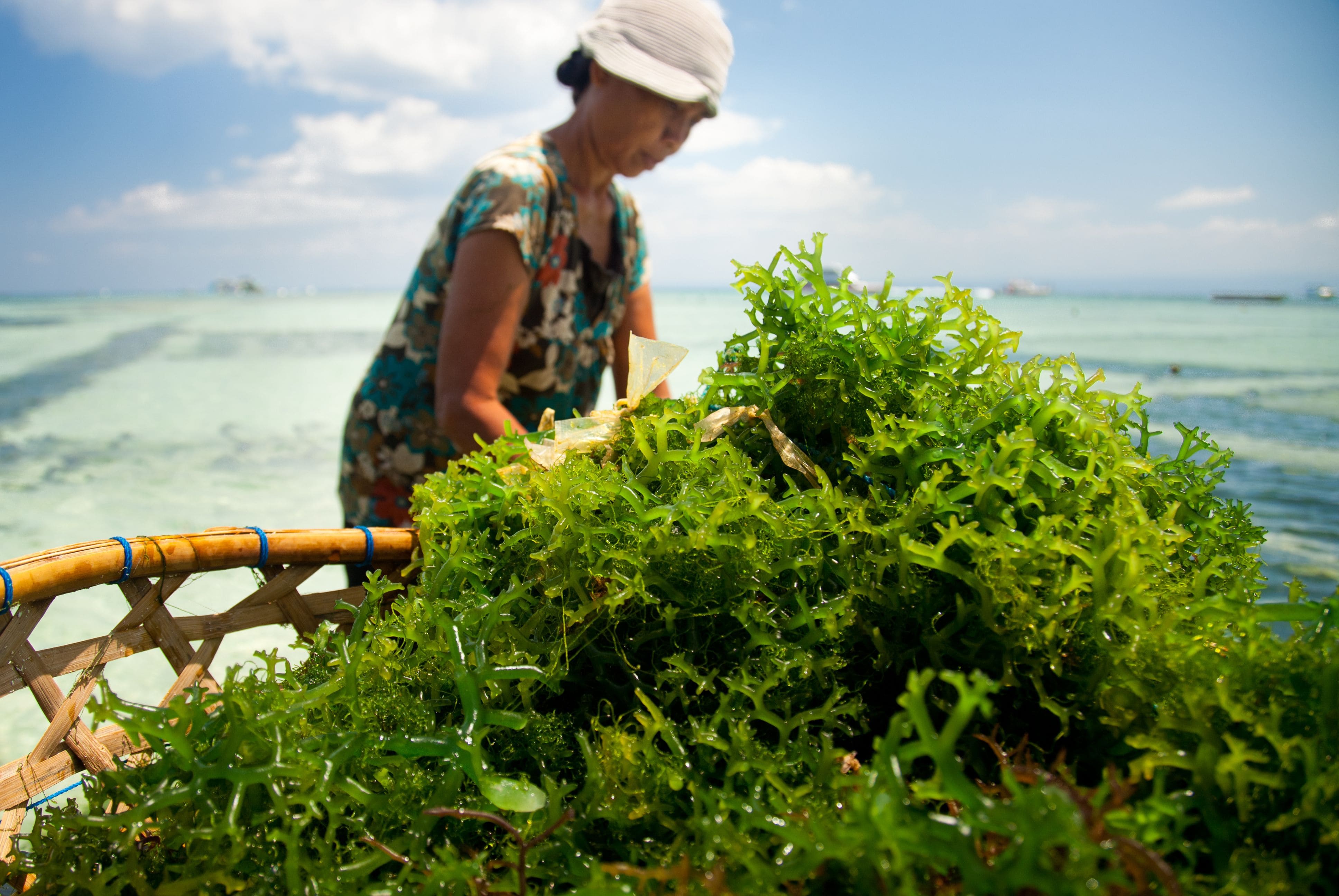
Photos
are just for reference and don’t reflect the actual local situation.
While Maine has long been synonymous with its iconic lobster industry, a
new, underwater "gold rush" is transforming the state’s rugged
coastline. The Blue Economy—a sector dedicated to the sustainable use of
aquatic resources—is rapidly becoming the engine of Maine’s economic future,
merging traditional maritime heritage with cutting-edge biotechnology.
A Seaweed Superpower
The transformation is most visible in the state’s seaweed production,
which has skyrocketed from just 45,000 pounds in 2017 to over 1 million
pounds in 2022. Maine now supplies a staggering 60% of all edible farmed
seaweed in the United States. Leading this charge is Atlantic Sea Farms,
which reported a record-breaking 2024 harvest of 1.3 million pounds through its
partnerships with fishermen across Maine, Rhode Island, and Alaska.
Economic Tides Are Rising
The financial impact of this "blue" surge is hard to ignore. The
sector currently generates an estimated 3.2 billionin annual economic
impact and supports 33,000 jobs. With Maine’s aquaculture
industry targeting 800 million in
exports by 2025, the state is scaling up its infrastructure
to meet global demand. A key example is a new industrial seaweed dryer funded
by Coastal Enterprises and Ocean’s Balance, which has boosted daily processing
capacity to 30,000 pounds.
Where Biology Meets Artificial Intelligence
Maine isn't just growing more seaweed; it's getting smarter about it. The Bigelow
Laboratory for Ocean Sciences recently secured $7 million in federal
funding to build a research infrastructure and industry accelerator, aiming
to push algae applications into pharmaceuticals and agriculture.
Simultaneously,
the intersection of tech and the tide is being explored through "Blue
w(AI)ve," a 16-week accelerator program. A collaboration between Gulf
of Maine Ventures and Northeastern University’s Roux Institute, the initiative
focuses on early-stage startups using Artificial Intelligence to solve
ocean-related challenges.
Resilience Against a Changing Climate
Beyond the balance sheets, the Blue Economy is a lifeline for coastal
communities facing climate uncertainty. By diversifying income streams for
traditional fishing families, aquaculture is enhancing the region's climate
resilience. It offers a sustainable path forward that protects the
environment while opening doors for the next generation of aquatic
entrepreneurs.
As Maine steers toward its 2025 growth targets, one thing is clear: the future of the state's economy is not just on the water—it’s in it.
Related Hi-Q Products