Supporting Patients Through Radiation Therapy: What Fucoidan Research Shows
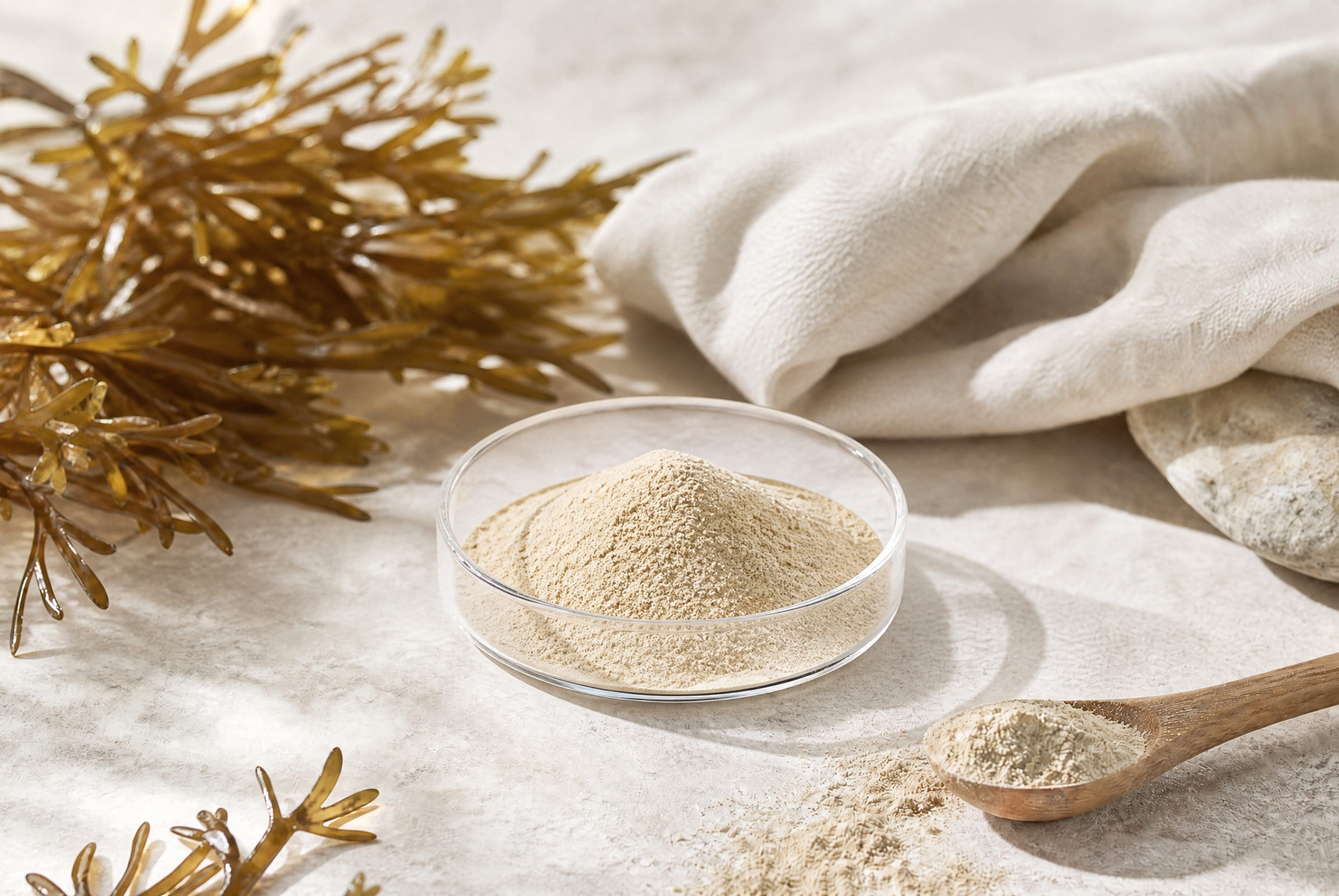
A look at why marine polysaccharides are gaining attention in supportive oncology nutrition.
Roughly half of all cancer patients will receive radiation therapy at some point during their treatment. It is powerful, precise, and saves lives — but it also comes with side effects that can be hard on the body, from inflammation and tissue fibrosis to fatigue and gastrointestinal discomfort. Increasingly, oncology teams, nutritionists, and patients are looking at how supportive nutrition can help. And one marine bioactive keeps showing up in the research: low-molecular-weight fucoidan.
Why supportive care matters
Radiation does its job by damaging cancer cells, but healthy tissue nearby inevitably feels the impact too. Common challenges include radiation-induced fibrosis (scar-like changes in lung, gut, or skin tissue), enteritis, inflammation, and a measurable hit to quality of life. When side effects get severe, treatment is sometimes delayed or stopped — which is why supportive care has become a genuine clinical priority, not an afterthought. Nutrition that may help the body tolerate treatment better is a growing area both clinics and brands are paying attention to.
What the research shows
Hi-Q's Oligo Fucoidan (low-molecular weight fucoidan) has been studied in multiple peer-reviewed papers exploring how it interacts with radiation-related tissue stress. A few highlights:
• Lung tissue protection. Wu et al. (2018) reported that fucoidan helped reduce inflammatory cytokine expression in lung tissues and slowed radiation-induced pneumonitis and fibrosis in preclinical models.
• Gut tolerance. Wu and Tsai (2020) explored a self-assembled fucoidan–chitosan nanoparticle system that showed a radioprotective effect on intestinal tissue — directly relevant to radiation enteritis, one of the most common side effects of pelvic and abdominal radiotherapy.
• Fibrosis pathway. A follow-up paper by Wu et al. (2020) traced fucoidan's anti-fibrotic effect to inhibition of the TGF-β1/Smad pathway and reduced collagen I accumulation — offering a clear mechanism for the wider tissue-protection findings.
• Long-term outlook. In a zebrafish model, Yu et al. (2020) found that low-molecular weight fucoidan helped prevent both radiation-induced fibrosis and the development of secondary tumors — a reminder that supportive care can have implications well beyond the treatment window.
• Human clinical data. Looking beyond radiation, a double-blind randomized controlled trial by Wang et al. (2017) in patients with metastatic colorectal cancer reported that low-molecular weight fucoidan was well tolerated as a supplemental therapy, supporting its role in integrative oncology nutrition.
None of these studies suggest fucoidan replaces standard cancer treatment. The story they collectively tell is more useful: it may help the body manage the collateral damage of treatment.
What this means for B2B formulators
Supportive oncology nutrition is one of the fastest-growing categories in clinical nutrition. Brands are looking for ingredients with credible research, manageable safety profiles, and stories that resonate with both clinicians and patients. Low-molecular weight fucoidan fits naturally into capsules, sachets, ready-to-mix powders, and clinical nutrition formulas — and pairs well with protein, glutamine, omega-3s, and antioxidants commonly used in oncology support products.
Why Hi-Q
OliFuco® is our small-molecule weight Oligo Fucoidan, extracted from Laminaria japonica (Saccharina japonica) sustainably cultivated in the cold, clean waters of Matsu, Taiwan and Goheung County, South Korea. It is backed by 70+ peer-reviewed publications across oncology, fibrosis, immunity, and metabolic health — including the human clinical work referenced above — and is produced under ISO 22000 and HACCP-certified manufacturing.
→ Request an OliFuco® sample | Talk to our B2B team
References
• Wu S-Y. et al. (2018). Fucoidan Inhibits Radiation-Induced Pneumonitis and Lung Fibrosis by Reducing Inflammatory Cytokine Expression in Lung Tissues.
• Wu S-Y., Tsai H-C. et al. (2020). Radioprotective effect of self-assembled low molecular weight Fucoidan–Chitosan nanoparticles.
• Wu S-Y. et al. (2020). Protective Effect of Low-Molecular-Weight Fucoidan on Radiation-Induced Fibrosis Through TGF-β1/Smad Pathway-Mediated Inhibition of Collagen I Accumulation.
• Yu C-H. et al. (2020). Low Molecular Weight Fucoidan Prevents Radiation-Induced Fibrosis and Secondary Tumors in a Zebrafish Model.
Wang C-Y. et al. (2017). Efficacy of Low-Molecular-Weight Fucoidan as a Supplemental Therapy in Metastatic Colorectal Cancer Patients: A Double-Blind Randomized Controlled Trial.
Related Hi-Q Products