Why Species Matters: The Science Behind Choosing Laminaria japonica as a Premium Fucoidan Source
Not all brown seaweed produces the same fucoidan. A look at why species, sourcing, and cultivation waters quietly define what ends up in your supplement bottle or skincare jar.
Walk through a wellness aisle or scan the back of a premium skincare bottle and you may notice the word "fucoidan" appearing more often. It is now a recognized marine bioactive across nutrition, oncology research, and modern beauty formulation. But here is a question rarely asked at the point of purchase: which brown seaweed did this fucoidan come from? Because not all fucoidan is created equal — and the species, the water it grew in, and the way it was cultivated all quietly shape the final ingredient.
A quick tour of brown seaweed
The world of brown algae (Phaeophyceae) is much wider than the dried sheet of nori on a sushi roll (which is actually a red seaweed). Several species are studied as fucoidan sources, and each one is a little different:
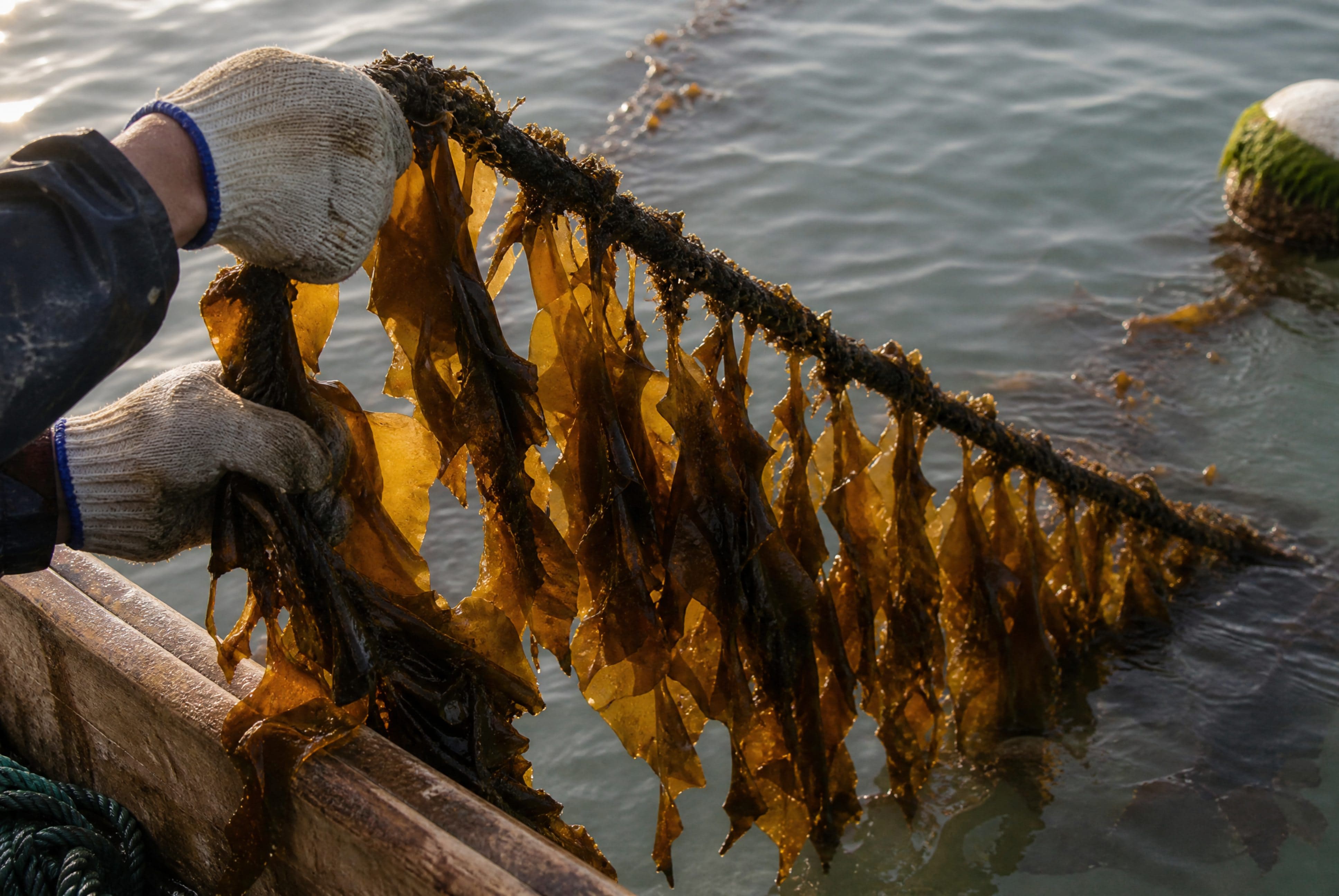
• Saccharina japonica (Laminaria japonica) — the cold-water kelp known as "kombu" in Japan, "dasima" in Korea, and "kunbu" in Chinese. Cultivated extensively across East Asia.
• Undaria pinnatifida — wakame, widely used in Japanese and Korean cuisine.
• Fucus vesiculosus — bladderwrack, common along North Atlantic coasts.
• Cladosiphon okamuranus — mozuku, the thread-like brown algae traditionally cultivated in Okinawa.
Each species produces fucoidan with slightly different sulfation patterns, sugar compositions, and molecular weight ranges — meaning their biological activity is not interchangeable.
Why Laminaria japonica is the gold standard
Among the species used for commercial fucoidan, Laminaria japonica (now botanically named Saccharina japonica) stands out for three reasons:
• A well-characterized fucoidan profile. Decades of research have detailed its sulfation, sugar composition, and bioactivity — giving it the deepest scientific foundation of any commercial fucoidan source.
• High biomass and consistent cultivation. It is one of the largest and fastest-growing kelp species, supporting a stable, year-round supply that smaller-volume species struggle to match.
• 70+ peer-reviewed publications. Most of the human clinical and preclinical work on low-molecular weight fucoidan — across metabolic health, oncology support, cardiovascular wellness, and skincare — has been conducted using fucoidan derived from Laminaria japonica.
In short: when scientists say "fucoidan," they are usually working with this species.
Where Hi-Q grows its seaweed
Hi-Q sources its raw Laminaria japonica from two carefully chosen cold-water regions:
• Matsu, Taiwan — an archipelago in the Taiwan Strait whose cold currents and clean coastal environment have supported traditional brown seaweed cultivation for generations.
• Goheung County, South Korea — one of South Korea's most important seaweed-producing regions, where mineral-rich southern waters and a long aquaculture heritage produce kelp of exceptional consistency.
Both regions share what matters most for ingredient quality: cool water temperatures, low pollution levels, and deep local expertise in kelp cultivation. The seaweed is harvested at carefully timed stages of growth to maximize fucoidan content before further extraction in our certified facilities.
A sustainability story you can actually tell
Brown seaweed cultivation is one of the few forms of food production that genuinely performs well on every environmental metric. It requires:
• No freshwater — seaweed grows in the ocean.
• No fertilizer — nutrients come naturally from the sea.
• No arable land — useful in a world running short of farmland.
• Net positive carbon impact — growing kelp absorbs CO₂, and well-managed cultivation creates marine habitat that supports broader biodiversity.
For brand owners, that is a sustainability narrative grounded in fact, not marketing. For end consumers, it is increasingly a reason to choose marine-derived products over land-grown alternatives.
Why this matters
The next time you pick up a fucoidan supplement, skincare serum, or pet wellness product, the species and source behind it are worth asking about. For Hi-Q, the answer is the same across our entire product family: Laminaria japonica (Saccharina japonica), sustainably cultivated in the cold, clean coastal waters of Matsu, Taiwan and Goheung County, South Korea. It is what allows us to back our products with a decade-plus of peer-reviewed science — and to tell that story with an environmental record we are proud of.
Related Hi-Q Products